Helping Children Cope With Grief: An Age-by-Age Guide for Families
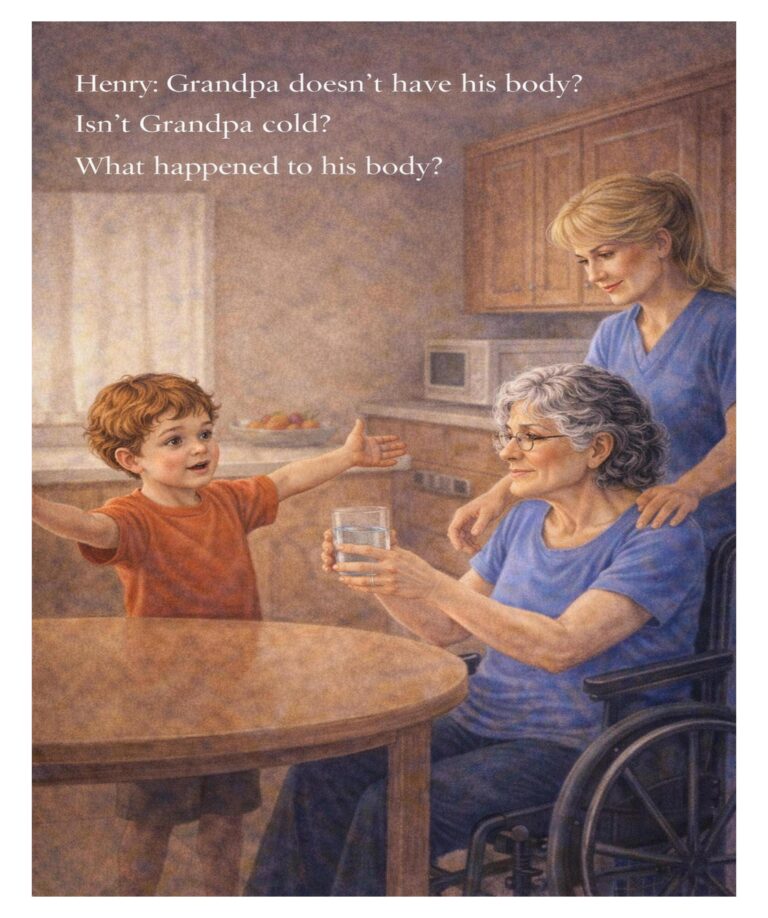
Helping children cope with grief starts with honest, simple words and a steady adult who stays close. When someone a child loves dies, the questions often come fast: “Where is Grandma now?” “Is she coming back?” “Did I do something wrong?” This guide explains how children understand death at different ages, what to say (and what to avoid), what normal grief looks like, and when to reach out for extra help.
It was written by Michael Carter, author of the children’s grief books Grandma’s in Heaven and Grandma Lives in Heaven. It draws on guidance from pediatric and child-psychiatry organizations, which are linked below. It is general information for families, not medical or mental health advice.
Four Ideas Children Need to Understand About Death
Child-development experts describe four ideas that help a child make sense of a death. Children usually grasp them gradually, and most understand them by about ages 5 to 7. However, even younger children can begin to learn them with simple, patient explanations.
- Death is permanent. The person is not coming back, even if the child wishes very hard or behaves perfectly.
- The body stops working. The person no longer breathes, eats, feels pain, or feels sad. This helps children stop worrying that Grandma is cold, hungry, or hurting.
- All living things die eventually. For example, plants, pets, and people all have a life span. Most people live a long time.
- There is a real cause. Something happened to the body, such as an illness, an injury, or the body getting very old. Nothing the child said, thought, or did caused it.
How Children Understand Death at Different Ages
Of course, every child is different, and a child’s own experiences matter as much as age. These broad stages can help you know what to expect.
Babies and toddlers (under 3)
Very young children do not understand death, but they do feel the absence of a familiar person and the stress of the adults around them. As a result, they may become fussy, clingy, or unsettled. Because of this, what helps most is routine, cuddles, and calm caregivers.
Preschoolers (about 3 to 5)
Preschoolers often think death is temporary or reversible, like sleep or a trip. They may ask the same question many times, expect the person to return, or act out death in play. In addition, they tend toward “magical thinking,” believing their wishes or behavior made something happen. Use short, concrete words, answer the same question as many times as it comes, and say clearly that it is not their fault.
Early school age (about 5 to 8)
Children this age begin to understand that death is final, and they often want details: how it happened, what happens to the body, what a funeral is. At the same time, they may worry that they or someone else will die next. So give honest, simple answers, and reassure them about who takes care of them.
Older children (about 9 to 12)
Older children understand death much as adults do, but they may not have the words for their feelings. For example, some act “fine,” some get angry or silly, and some have trouble at school. Instead of pressing, invite conversation without forcing it, and keep routines steady.
Teenagers
Teens grieve deeply but often turn to friends rather than family, and may hide their feelings to seem strong. For this reason, stay available, share your own grief honestly, and let them know it is okay to talk to a trusted adult, counselor, or faith leader.
What to Say to a Grieving Child
You do not need perfect words. Clear, calm, and repeatable words work best. Instead, try this simple structure:
- Say what happened plainly: “Grandma died.”
- Explain briefly: “Her body stopped working. She can’t breathe or feel anything anymore, and she isn’t hurting.”
- Reassure safety: “You are safe. I’m here, and I’m going to take care of you.”
- Name the feeling: “It’s okay to feel sad, mad, or confused. It’s also okay if you don’t feel sad right now.”
- Invite questions: “What are you wondering about?” If you don’t know the answer, it is fine to say “I don’t know,” and add, “But I’m here with you.”
Families of faith may also want to share their beliefs about Heaven. In fact, that can bring real comfort, especially when it is paired with the simple facts above, so a child understands both that the person died and that love continues.
What to Avoid Saying
Unfortunately, gentle-sounding phrases can confuse young children, who often take words literally.
- “Grandma went to sleep.” A child may become afraid of bedtime or wait for her to wake up.
- “We lost Grandma.” A child may wonder why no one is looking for her.
- “Grandma went away.” A child may feel abandoned or expect her to come back.
- “You need to be strong” or “Don’t cry.” These can teach a child to hide feelings they need to express.
Instead, use the words “died” and “death.” They feel hard to say. Even so, they are kinder in the long run because they are clear.
What Normal Grief Can Look Like in Children
Children often grieve in short bursts, moving between sadness and play in the same afternoon. However, that does not mean they have “gotten over it.” Common reactions include:
- Asking the same questions again and again.
- Clinginess, trouble separating, or wanting to sleep near a parent.
- Changes in sleep, appetite, or bathroom habits, especially in younger children.
- Irritability, anger, or behavior that seems silly or out of place.
- Stomachaches or headaches with no clear cause.
- Worry that someone else they love will die.
Also, grief often returns at birthdays, holidays, and new milestones. Expect it, and treat it as normal.
Everyday Ways of Helping Children Cope With Grief
- Keep routines. Regular meals, school, and bedtime help children feel safe.
- Remember together. Look at photos, cook Grandma’s recipe, or make a small memory box.
- Offer creative outlets. Drawing, writing a letter to the person who died, or planting a flower gives feelings somewhere to go.
- Read together. A gentle story can open a conversation that is hard to start any other way. Grandma’s in Heaven is written for the first days after a death, and Grandma Lives in Heaven helps children learn to live with missing someone. For step-by-step reading tips, see this parent reading guide, or read our overview of choosing a kids grief book.
- Tell the school. Let teachers and the school counselor know, so they can watch for changes and offer support.
- Take care of yourself. Children learn how to grieve by watching the adults they trust. So it is okay for them to see you sad.
When a Child May Need Extra Help
Helping children cope with grief usually takes time. Most children, with steady love and support, slowly adjust. However, some need more. Consider talking with your child’s doctor, a school counselor, or a child mental health professional if your child:
- Withdraws from friends and activities for a long time.
- Has a sharp drop in school performance or refuses to go to school.
- Keeps acting as if the person has not died, long after the loss.
- Shows ongoing sadness, hopelessness, or loss of interest in things they used to enjoy.
- Has sleep or eating problems that do not improve.
If a child talks about wanting to die or to “be with” the person who died, seek help right away. In the U.S., you can call or text 988, the Suicide & Crisis Lifeline, at any time. In an emergency, call 911.
Trusted Sources on Helping Children Cope With Grief
For more on helping children cope with grief, these organizations offer detailed guidance. This guide follows their general advice:
- American Academy of Pediatrics (HealthyChildren.org): How Children Understand Death: What to Say When a Loved One Dies
- American Academy of Child and Adolescent Psychiatry: Grief and Children
For crisis lines, counselor directories, grief camps, and Michigan programs, visit our full directory: Grief Support Resources for Children, Families, and Schools.
Frequently Asked Questions
Should my child go to the funeral?
Many children benefit from being included, as long as they are prepared ahead of time: what they will see, how long it will last, and that they can leave with a trusted adult if they need a break. Then let them choose, and do not force it.
Is it okay to cry in front of my child?
Yes. In fact, seeing you grieve shows a child that sadness is normal and that people can be sad and still be okay.
How long does grief last in children?
There is no set timeline. Grief usually softens over months. Still, it can return at new ages and milestones as a child understands the loss in new ways.
Which book should I read with my child?
For the first days after a grandparent dies, start with Grandma’s in Heaven. For the weeks and months that follow, try Grandma Lives in Heaven. You can read why the first book was written in Why I Wrote Grandma’s in Heaven.
Have a question, or want copies for a school or grief group? Contact Michael Carter.
This page is for general education and support. It does not replace medical, mental health, or emergency services.