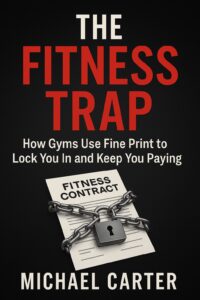
The Fitness Trap
How Gyms Profit from Your Struggle — and What You Can Do About It
What “How Gyms Profit from Your Struggle” Actually Means
This book makes a direct claim: many gyms don’t maximize profit by helping every member succeed.
Instead, profit is often strongest when a large number of people join with hope, struggle to build a routine,
and then stop attending—while payments continue.
The Fitness Trap breaks down the mechanics behind that outcome: the breakage model, autopay inertia,
capacity math, sales funnels, and cancellation friction. In other words, it explains how the business can win when you feel stuck.
Profit Mechanism #1: The Breakage Model
The “breakage model” is simple: a gym can sell far more memberships than its floor could handle if everyone showed up consistently.
That only works when a large share of members break their attendance habit.
The business logic is straightforward:
- Sign-up is made easy (quick enrollment, limited-time offers, upbeat promises).
- Attendance drops after the first few weeks for many people (normal human behavior).
- Billing continues through autopay even when usage stops.
- Overcrowding is avoided because the facility depends on non-attendance.
If you’ve ever felt guilty about “not going enough,” the book reframes it: your struggle can be a predictable part of the revenue model.
Profit Mechanism #2: Autopay Inertia
Autopay is not just convenient—it is sticky. When billing happens automatically, the decision to keep paying becomes passive,
especially when life gets busy and attendance drops. Consequently, the gym doesn’t need you to renew; it needs you to forget.
The Fitness Trap explains how inertia is monetized: once the payment runs in the background,
many people delay cancellation because it feels like admitting failure. That delay is measurable revenue.
Profit Mechanism #3: Cancellation Friction
The easiest way to keep revenue is to make exit inconvenient. This book calls it engineered friction:
extra steps, narrow cancellation windows, required forms, required visits, or unclear instructions.
Friction works because it hits people at the worst moment—when they already feel disappointed in themselves.
The book walks through common friction patterns and how to respond with documentation and persistence.
Common friction patterns
- “You must cancel in person during staffed hours.”
- “Your cancellation request wasn’t received.”
- “You’re locked into another billing cycle.”
- “Your contract requires 30 days notice.”
Profit Mechanism #4: Selling the Restart
When motivation drops, many people don’t quit immediately. They restart. That restart cycle is profitable.
A person who struggles may buy add-ons that promise a reset: training packages, supplements,
assessments, premium tiers, or “accountability” services.
The book doesn’t argue against coaching or support. It argues against a system that repeatedly sells the same hope
without fixing the conditions that cause most members to stall.
How the “Struggle” Gets Monetized
The most expensive part of fitness for many people isn’t the workout. It’s the emotional loop:
optimism → missed days → guilt → avoidance → renewed optimism → another restart.
When shame replaces strategy, people pay longer while attending less.
The Fitness Trap names the problem clearly: the gap between desire and routine is normal.
However, when that gap is monetized, the customer is trained to blame themselves instead of evaluating the structure.
What You Can Do About It
The second half of the book is practical. It gives you steps to avoid traps before you sign,
and it gives you a clean process to exit if you’re already locked in.
Before you sign: a quick defense checklist
- Cancel policy first: get it in writing before you pay anything.
- Billing cadence: confirm exact billing date, fees, and notice period.
- Contract term: month-to-month vs. annual vs. “minimum commitment.”
- Freeze rules: how to pause, what it costs, and how long it lasts.
If you need to cancel: a clean process
- Document everything: screenshot portal steps and save emails.
- Use a written request: email or certified mail if required.
- Ask for confirmation: request the cancellation effective date in writing.
- Watch billing: confirm the final charge aligns with the contract.
The goal is simple: remove emotion from the process and treat cancellation like a documented transaction.
Get Your Copy of The Fitness Trap
If you’ve ever paid for a membership while feeling stuck, this book explains the system and gives you practical steps
to protect your time, money, and motivation.